Most of us confuse the brain with the mind, believing changing one will instantly transform the other. But what if that’s the illusion—the trick our brain plays to keep us safe and fixed in stories about who we are?
Most of us confuse the brain with the mind and speak of them interchangeably.
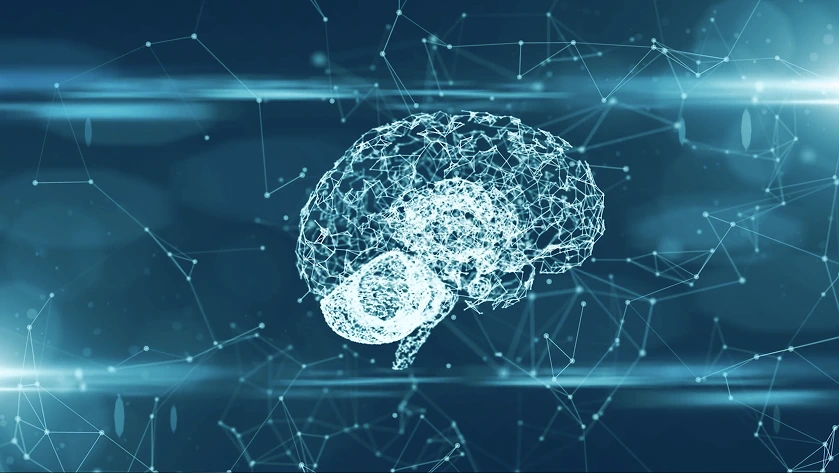
Think of the brain as the hardware and the mind is the software. The unexamined mind will default to show us a limited view of what is possible.
It is a trick our brain plays to keep us safe and fixed in stories about who we are.
Just changing your thoughts or rewiring our brain is only going to get you so far in life. You can change your thinking and maybe attract a relationship that looks good on paper or more success that leads to outer riches but you are still “thinking” from the same self-concept. You may even imagine being cloaked in a new, more spiritual persona but deep down it is not true transformation.
Most personal growth and therapy is based on ego-building or as I refer to it as “rearranging the furniture” in the same house. This may lead to a shinier external life but you aren’t living from what your soul intended.
In Jungian Coaching, we don’t necessarily want a prettier house, we want to transcend the house.
Most of our clients already have a pretty house, but it isn’t satisfying. They feel something is missing.
Just adding another coat of paint to the walls isn’t the answer and we don’t want to get rid of our house (we need our ego). But, to really feel free, we need to see the true self beyond the house.
Our limitless nature.
If you want to become a life coach and wonder how you can help others, listen to our recent JUNG ON PURPOSE podcast episode (previously named Soul Sessions) to explore how our unique Jungian coaching model is the future of coaching.
In our next JUNG ON PURPOSE podcast episode, we explore the relationship between the brain, mind, and consciousness through neuroscience, psychology, and Eastern philosophy. Explore the common misconceptions about these concepts, the role of neuroplasticity, the default mode network, and the observer within us. We reveal how understanding these systems can lead to profound personal transformation and a deeper sense of reality.
In this episode:
- The difference between the brain and the mind, and their roles in consciousness
- How the brain functions as hardware and the mind as software
- The concept of the observer and pure awareness from Eastern philosophy
- The inner connections of the brain and the default mode network’s role in identity
- The influence of the survival brain and ego on our self-identity
- The illusion of reality and the importance of waking up from the default narrative
Want to explore Jungian Coach Training in more detail?
Transform your life and the lives of others with our unique ICF-Accredited, 9-month depth coach certification training based on Jungian Psychology, Eastern Spirituality and Social Neuroscience.
Get your free Program Brochure to explore your path to becoming a Jungian Life Coach.
If you want us to explore a topic or answer a question, please comment below. We’d love to answer your questions on a future podcast!
Stay Connected with Debra and Dr. Rob:
Instagram | LinkedIn | YouTube | Facebook | creativemindlife.com | connect@creativemindmethod.com
Episode Transcript
Debra (00:01.004)
Hello everyone, welcome back to Jung On Purpose. am Debra Maldonado.
Dr. Rob (00:05.911)
I’m Dr. Rob, welcome to the show.
Debra (00:08.288)
And we are with Creative Mind and the founders of the NeuroMindra coaching method where we teach young and life coaches how to empower their clients in a coaching model going deep into young in psychology. So today we are continuing our series about the mind and mindset. And last week we talked about genetics and we talked about why, how, what the genes are doing. we stuck?
As our fate stuck because our genes aren’t the best or there’s some flaw in our genes Are we limited by that and we all of course said no because we don’t believe in limitation and today we wanted to continue talking about neuroscience and the brain many people are interested in that aspect of our work in our approach to neuroscience so Before we begin though, I do want to ask you a favor. Please subscribe to our channel or if you’re watching us
On YouTube, there’s a link in the corner to subscribe. We’d love to see you here every week and it helps us reach more people with this information. So thank you so much. Let’s talk about the brain, Rob. Let’s talk about the brain.
Dr. Rob (01:14.563)
Yeah.
My favorite topic. One of them.
Debra (01:21.26)
So one of the core ideas is that people mix. And I remember when I first started coaching this idea that the brain and the mind, people confuse it, that it’s the same thing. Like I have to fix my brain. Some clients would say, I have to fix my brain. I got to shift my brain.
Dr. Rob (01:31.546)
yeah. Yeah.
Dr. Rob (01:39.309)
Right. Yeah. And the brain is used if you look at it symbolically, right. People use the brain to represent the mind and psychology and all this stuff. And so the brain, it is an amazing organ because it’s a physical organ that we can study and dissect and look at under the microscope. It’s an amazing instrument. It’s one of the most
Debra (01:49.614)
Mm-hmm.
Dr. Rob (02:09.391)
complicated objects in the universe as far as we know. But there’s still a lot of questions, especially around the question, is the brain generating consciousness? Or is it more like an instrument like a lens or a way to focus consciousness?
Debra (02:32.238)
And what would you say? Well, I was told the brain is not the mind. The brain is what the mind uses. It’s an instrument that the mind uses. And if we think about in Eastern philosophy, they talk about the koshas and there’s the outer physical layer, the prana, which is the kind of the energy, the breath. And then you go inward and it’s the mind. So there’s, it’s like kind of we’re working on that outer layer.
Dr. Rob (02:34.415)
Well, from
Debra (02:58.83)
And so if you’re just changing the outer layer, it’s like getting a face lift, but you’re still the same person.
Dr. Rob (03:05.763)
Yeah, I mean, that’s a good metaphor. Also, the idea of computers. If you think about the brain, the wetware, meaning the neurons, the physical organ of the brain that is in your skull, that’s like the hardware, right? You can weigh it, you can dissect it, you can look at all the neural connections. And the mind is like the software.
programs that we run that we don’t necessarily see. We use these little icons to kind of identify them and to see what program we’re running, but we don’t see it running and we don’t necessarily see all the coding and numbers that are behind that. Yet it gives us an experience of mathematics, of visualization, of writing, all this incredible rich
material that we call experience and knowledge, yet nowhere to be seen. And so that’s kind of what the mind is, right? It’s this invisible thing that gives us this rich subjective experience, this qualia, as it’s often called, of our lives, these qualities of our lives that are very personal, very intense, and very meaningful to us.
But if we reduce all that to brain stuff, then we’re left with, okay, we can see on the MRIs a little bit of, know, these neurons are lighting up when we’re thinking about a loved one or playing the violin or riding a bike. You know, it reduces down to nothing essentially to neuronal electrochemical signals.
Debra (05:01.42)
And so I have one more distinction is that the mind is not just our thoughts, because, you know, most people don’t know they have an unconscious, but the mind, a lot of people use the term mind, I got to fix my mind mindset is all about the conscious thought. And so that’s just a part of the mind too. Like it’s like, if I rewire my thoughts and rewire my brain to think more positive, I’ll have better experience in life.
Now it gives the illusion that you are having a happier life because if you’re changing your brain or your mind and your thoughts around what you’re seeing, you’re changing the story, of course it’s going to feel different and then your brain’s going to react differently. All that stuff is very valuable. Is that what you would say CBT does as far as like changing the story around the…
Dr. Rob (05:56.1)
Well, cognitive behavioral therapy in the model, yeah, you’re essentially challenging the client to correct their misperceptions and their miss thinking, their kind of illogical or unreasonable thinking, sometimes called biases, sometimes called distortions.
These cognitive distortions essentially are making the client miserable by misrepresenting reality or their reality to their own mind. And therefore, the therapist or the coach is helping the client correct those misperceptions, those…
distortions, those cognitive distortions so that the client now is seeing things in a clearer or more precise way.
Debra (07:02.39)
And so what we’re thinking about changing our mindset or changing our thoughts, motivation, all those things. So the brain learns when to trigger emotion and not from that. The brain is like a receptor taking on information and then it remembers how to respond to certain stimuli. And then that it becomes this, what we call our patterns or our conditioned behavior.
Dr. Rob (07:29.153)
Yeah, that’s one way to think about it because we know conditioning is a powerful, powerful and often underrepresented in our understanding of human behavior. But if you look at nature, every animal operates on the principle of conditioning, meaning they try things and if something works,
it’s reinforced because of that, that it works, right? It gives them a reward of some kind. They find food, they find shelter, they find family, whatever it is. And that reinforcement then continues that behavior. It reinforces it, which means that behavior increases in the organism and it becomes their way of surviving.
And it’s a great response to the environment. They move towards safety, comfort, nourishment, and move away from danger, from aversive situations, those kind of things. So it’s a very powerful biological principle that our bodies and our brains use all the time. But we think because we’re thinking and we’re feeling.
and we’re doing such a complex social behavior, we think, we’re beyond conditioning. You know, we’re kind of, right, right. And that is one of those cognitive distortions basically, because we know we’re still under the principle of conditioning, meaning that our environment, although it be social environment, our social environment and our physical environment,
Debra (09:03.094)
We have a free choice. We could change our mind at any time, right?
Dr. Rob (09:25.193)
is shaping our behavior. In other words, if you if you understand a person’s environment, you pretty much can’t predict their behavior based on their social environment. And, and that’s, you know, that’s the power of conditioning. One of the big questions in psychology in behaviorism, especially was, can we be free from this conditioning effect of the environment? Because
Really, if you think about the consequences, it means we are not exerting free will at all.
Debra (10:05.016)
But we do because there’s people who grew up in very poor environments and then they are that one person who breaks out and becomes successful and determined. And then there’s, I think the odds are harder because the environment is so powerful. But if one person can escape that poverty mentality, that means that no one’s bound.
Dr. Rob (10:16.175)
Mm.
Debra (10:29.898)
So I just want to talk a little just before we go into the brain more that the mind when we talk about the mind, it isn’t just thoughts. And so the brain isn’t the whole thing. The mind isn’t even the whole thing, because the mind is not just thoughts, because the mind is also what Jung would call the psyche, which is this bigger kind of mental experience that we’re having, that’s both conscious, unconscious, and then collective. But we’re not going to get into that today. We have plenty of other
other podcasts on the collective unconscious and Jung’s work, I wanted to stick with the neuroscience right now. so when we think about the brain, let’s talk about the three parts that we really think about that are important for us. The reptilian brain, which is the back of the brain, the first part of us that evolved and it’s a survival brain. Then there’s the limbic system, the limbic brain, which is the emotion.
And then we have the neuro cortex in the front of the brain, which evolved later, which is symbolic. So the brain is set up for us to have, you know, survival instincts to motivation, you know, that’s where our motivation to live comes from. And then the emotional part is really kind of giving us like a sense of the world in an emotional way and a physical felt sense in the body. And then the neocortex is the one that makes it means something.
And so, but it’s not the source of meaning making, it’s the instrument that your mind uses for meaning making. So, the potential was there before humans evolved, Or what was before human, the potential was there, apes, you know, to think, but then when the human brain evolved, it was like, it was able to be expressed.
Dr. Rob (12:21.645)
Yeah, the brain continues to evolve. That’s something people forget. But we are continuously evolving. Although evolution takes time, we’re not able to see the changes sometimes that rapidly. Although we’re seeing it now as cultural evolution.
Debra (12:38.786)
Millions of years.
Dr. Rob (12:50.051)
that our culture is evolving so fast that it’s stressing our minds out a little bit, more than a little bit perhaps. But.
It’s as a species, we’re very young. Like we we barely just appeared on the planet and we already transformed the whole environment. Right. We’re transforming the whole of nature, the whole of the planet in our image, in our technological image. And that’s the brain, essentially. That’s the power of the brain. It it it takes information about its world. Like you say, we’re
How do I survive? How do I attach to others and create family groups and who do I belong with? And then what kind of technology can I build as an extension of my intelligence? So we can think of our iPhones and computers as extensions of our own thought process, right? What do we do with them? We write, we store information, we communicate with each other.
Those kind of skills, I that’s what the brain does. And it’s been doing it for a couple of million years, but the technology feels completely fresh and new to us because now we’re the ones that are kind of evolving it and creating.
Debra (14:18.038)
And I heard someone say once that we had the ability to create cell phones as cavemen. just didn’t have the, like we wouldn’t have the, like it’s all raw material. It’s not something that, everything was there to create it. It’s just that we had to evolve that. But I wanted to say something important when we talk about the brain and I’m going to throw this idea by you when we talk about this is that, you know, in Eastern philosophy, again, we’re not the brain, we’re not the mind, we are the witness.
to this experience, which is the pure awareness in a non-dual philosophy that we teach. So there’s an awareness that is pure potential and that early parts of our world that when we were amoebas, we were only activating like maybe that reptilian brain and animals. And then there was an emotional limbic system with mammals. I would assume that with the mammals.
They because they had to bind with their child the the babies and stuff So then that brain evolved and then and then later on the neocortex evolved but the potential was always there It’s just the brain then evolved to facilitate our experience because everything has to come through in a physical world the senses and the brain is basically that tool it’s almost like being able to have a spaceship that you can experience the world with like the astronauts went to
the moon, couldn’t just fly there on your own, you needed some kind of system to get there. So the brain acts that for us. And when we think about the Jungian implication of this, that the reptilian and the limbic system are really what we’re working on when we’re changing our patterns, when we’re just doing therapy or changing our, you know, like our behaviors and, and then the neocortex is really where we bring in the imagination.
where we bring in greater meaning, spiritual ideas come in from that perspective. So we want to, in our own life, evolve from being that reactive, emotional, physical person that’s just reacting to stimulus and protecting ourselves to bringing this higher part of our consciousness online. Like coming online, I always say, that’s what individuation is. It’s like we’re kind of waking up
Debra (16:39.81)
to use our imagination to make better choices. And the brain is a tool that we can use for it because the brain has the ability to create images and visions, right? But how do we use the brain and evolve ourselves so that we can use the brain to its potential?
Dr. Rob (17:00.875)
Yes, so this is where neuroplasticity, which is what a lot of people refer to as rewind.
Debra (17:10.648)
Mm-hmm, yeah.
Dr. Rob (17:12.335)
comes in. But often what I hear is they have it backwards because they’re saying almost like rewire your brain so you can do these skills or acquire these things.
Debra (17:26.764)
or think positive, or get in a positive mindset, let me rewire my brain to or feel like be confident, you know, like I think myself as a confident person, right? Well, when I was a hypnotherapist, that was all about re reprogramming, know,
Dr. Rob (17:31.908)
You probably know more about what they’re after.
Dr. Rob (17:42.128)
Yeah, but the mechanism works in the opposite direction. The rewiring effect is a result, not the cause of the change. So in other words,
Debra (18:00.045)
The effect versus the mechanism to change, it’s the effect of the change.
Dr. Rob (18:04.993)
Right, so if you want to rewire your brain, you have to challenge your brain to try and do something that it’s not, it doesn’t believe it can do.
Debra (18:15.966)
Or challenge who the thinker is. Like who’s the one thinking? Like changing how you think versus what you’re thinking.
Dr. Rob (18:26.315)
Anything that challenges the patterns, the set patterns, will kind of apply pressure to the brain to adapt. In other words, to create new neural connections that aren’t there right now. So it’s kind of a biological, environmental pressure that we’re placing on ourselves so that we can direct our own neuroplasticity.
So anytime you challenge yourself and you say, I’m gonna learn something new, I’m gonna learn the violin, I’m gonna learn genetics, I’m going to do something that I’ve never done, I’m gonna build a house, anything that you’ve never done before and that you’re not sure you can do. I mean, I’m just kind of placing it in practical terms,
Debra (19:15.458)
go public speaking or starting a new business and
Dr. Rob (19:19.585)
anything you’re uncomfortable doing, that’s the good stuff. That’s the good stuff, because that prompts the brain to create new neural connections, to be able to do that. And so people make the mistake that they think, well, if it doesn’t feel good, if it’s uncomfortable, if I’m uncomfortable doing it, maybe I shouldn’t be doing it. That’s the wrong read. Because what you’re doing is you’re limiting yourself and you’re saying,
Debra (19:22.978)
Running a marathon.
Dr. Rob (19:48.88)
The aim is comfort, not growth. And you want to be able to grow and use the full potential of the brain. And the way to do it is to challenge continuously. Be uncomfortable. Or like one of the coaches that we used to work with would say, be comfortable with being uncomfortable. Just get used to it.
Debra (20:15.192)
So one of the challenges and another evolution of this is, yes, go and try new things, rewire your brain, do what everyone tells you you can’t do, do the impossible, like climb that mountain, break that world record, start a business, save the world, come up with a life-changing solution to something. But here’s another layer, is that the brain
it because it’s part of the body. It is designed to revolve around your identity, right? It’s designed to protect you. It’s designed to create what they call the default mode network, which is the narrative around your life, like your life story. So I to talk a little bit about the persona and this constructed identity and that yeah, you could be Debbie who, you know, grew up in New Jersey, but now she’s an Olympian.
which probably will never happen. That would be an impossible feat, but you never know. Maybe Olympian for talking. that kind of the default mode network, which is our story and our narrative or self identity, the brain is really wired to keep us together as it’s designed for survival. So it’s going to everything’s around the identity. So I want to talk about how that works from a brain neuroscience perspective.
Dr. Rob (21:18.799)
Go for it.
Debra (21:44.61)
Because as we know, individuation is about individuating from that pattern.
Dr. Rob (21:49.838)
Yeah, so one of the first things to kind of keep in mind is that before these neural networks, the brain was pretty much understood like you were saying, these levels, the reptilian, the mammalian and the neocortex. Now this new way of looking at the brain is looking at the inner connections that are happening, right?
that how it works like a…
Debra (22:21.016)
Like synchronicity, like in sync, right, with each other.
Dr. Rob (22:24.289)
in sync exactly with all three parts or different parts of these three elements or three layers of brain operating together. And so the default mode network is one of those networks. So it’s more thinking in systems, right? What’s, what is the brain able to do? So one of them is this default mode network and it’s about thinking about yourself, right? Almost like when you’re
walking down the street, you’re not necessarily working on any particular problem. You’re able to ruminate about your who you are, where you’re going, where you’ve been. You kind of let your brain wander a little bit.
Debra (23:09.582)
It’s like unstructured narrative in a way, like kind of that humming of who am I and how you’re describing your world, like that movie with Will Ferrell where he was starting to hear his own thoughts. You know, like he’s brushing his teeth and wow, like that. Would that be the default mode network?
Dr. Rob (23:16.719)
Yeah.
Dr. Rob (23:31.885)
Yes, very much so.
Debra (23:32.834)
Be Stranger Than Fiction was the movie. Yeah.
Dr. Rob (23:35.472)
Oh, right, right. Remembering the past, imagining the future, daydreaming, what we call daydreaming, which is I love to do. was always getting in trouble because I was always looking out the window daydreaming. But now we know that’s a really good skill for a kid to have. But of course, you know, the schools don’t buy into a lot of this stuff.
Debra (23:47.362)
Me too.
Debra (24:01.262)
They’re like, pay attention, Jimmy, stop looking out the window. So the DMN is the story of who you think you are.
Dr. Rob (24:06.81)
Wondering where the-
Dr. Rob (24:11.065)
Yeah, because yeah, all those things, right? What is your past and what is your future? You’re kind of defining who you are by those things. And so though all those things together start to give you a sense of who is the hero in my life? Who’s the main protagonist, the main character?
Debra (24:34.75)
it’s almost like when people journal and they go ahead of that day, that’s the default mode network. It’s telling stories and trying to figure things out. And it’s often called a narrative loop, because it has the same kind of theme. You notice you’re always thinking you’re worried about the same things. Your life can change in incredible ways, but you’re still worried about the same thing. But like you maybe you’re it’s about money. But even if you make more money, you’re still worried in the same way or
relationships, you’re still worried, still things. So it’s that narrative loop that’s tied to our identity. Is that what you’re saying?
Dr. Rob (25:14.873)
Very much so. And it’s the default because most of us never question it. Like, you know, if you go to a party and people ask you, hey, who are you? What do you do? You kind of have a story already of who you are. And that story probably hasn’t changed in years and years and years because you believe
It’s true, right? What we are starting to find out is that it’s not necessarily true, because it’s an interpretation that your mind made of past experiences. And we know
Debra (25:57.177)
Well, you said even that there’s different parts of the brain storing different parts of the story. And when we remember it, the memory comes up, it’s retrieving like rough data, but it’s not accurate. Like, right? It’s like mixing it up a little bit. And then your adult perspective of how you’re now thinking about things is gonna distort what that memory was.
Dr. Rob (26:10.733)
I don’t know.
Dr. Rob (26:21.315)
Very much so. The more you learn, the more you experience, the more you modify your memories. Therefore, you’re modifying the story. But most people, they don’t bother to really update the story or to use their imagination to think in alternative ways. How can I interpret this story in a more creative way where it helps me or motivates me?
They don’t think in those terms because they’re assuming what they’re remembering is an objective reality. And that’s not what it is. It was not an objective.
Debra (27:00.984)
Well, these ideas like the body keeps the score and people who’ve had like traumas and things that happened to them or addictions and they have this, like it’s stuck in their body. And that’s the story. And then if you believe that that’s what will be the, your evidence, right? That will be your, it’s like a self-fulfilling prophecy that this thing happened to me damaged me for life. And now that’s what your experience will be. There’s no way to fix it, right? There’s no way I’m stuck this way. And
It’s like I’m broken. Yes, but that’s what most people think, you know, that they’re, it’s like a scarred for life. I’ve heard people say, I’m scarred for life. If I had different parents or I never took that train, I never took that job and never got married to that person, everything would be different. I’d be different.
Dr. Rob (27:30.489)
Well, luckily for us, there is a way to work with it.
Dr. Rob (27:40.857)
The, well.
Dr. Rob (27:50.672)
Yes. Yeah, part of the problem comes from science. I love science. We, you know, we both love science and we support it. But good science is like a democracy. It requires participation. It requires people to test it and criticize it and, you know, make it work right. What’s been happening in science is it’s gotten too lopsided to where
Everything is about reducing everything to its smaller components. And that reductionism is a valid criticism of current science because what it gives us then is we’re reducing ourselves to biological processes, To, yeah, we’re just neurons firing and all these neurochemicals in our brain are prompting us.
Debra (28:40.834)
Like we’re a machine.
Dr. Rob (28:50.123)
and forcing us in a way to do these things.
Debra (28:53.1)
I heard a lot of people talk about love too. You’re not really in love with this person. It’s just your hormones and the neurons firing and oxytocin flooding your brain. it’s like, takes the beauty of being human out of it, right? The pursuit of your dreams, spiritual experiences, all of that. Even past, not past life, but people who have near death experiences. The science is always like, well, your brain is doing this. So that’s what’s really happening. You weren’t really meeting your maker.
Dr. Rob (29:02.211)
Yeah.
Debra (29:23.008)
and seeing your life, that’s just what the brain does. And it’s reducing it to just a physical experience.
Dr. Rob (29:29.441)
It’s reducing it to the hardware, essentially to saying, well, it’s just the hardware doing its thing. And the rest you’re, you’re kind of imagining or just filling in the blanks, but that, that, that’s not a good picture of what we know about the brain and the mind and our ability to imagine. We know, for example, you mentioned metacognition, right? This, this ability to observe our own thoughts.
That’s a very powerful ability that we all have, and yet very few people use it. If you look at the function of meditation, that was essentially one of the functions is to cultivate the ability to kind of take yourself out of the picture when you’re imagining that default mode network.
about who you are and observe your thoughts in this neutral way where you’re able to observe what is your mind up to? What is it doing? Then you can intervene in a creative way because once you understand that, okay, my mind is making this stuff up like a dream almost, then you’re understanding perception in a much more realistic way.
Debra (30:56.622)
Can I just add that there’s like this idea of self-inquiry and there’s a level of you thinking about your thoughts or like questioning reality and you’re questioning your thoughts or trying to figure out a problem and you know your mind is active, not just reacting, but slowing down and examining and trying to make a choice, kind of ruminating. That’s a lower level of processing where the…
a witness is basically not identified as the thinker. And so there’s a, some of us are very good introspective people. And we’re thinking about our past and we’re thinking about our future and how to get out of certain things. But that’s a very, that’s your still ego based, as we say in our systems is like, your eye is still the one thinking and your eye is still the one trying to figure out the problem. And the ego does not have any imagination.
So we end up like trying to do problem solving with our mind, like our lower mind, and it just never really gets there. But the witness mind is really our pure, that pure intellect, as they say in Eastern philosophy, that’s like above the mind. It’s a way to watch. And that’s really where the intelligence and imagination comes from.
Dr. Rob (32:17.251)
Yeah, yeah, it’s an amazing ability that our brain or my body’s have.
People have been using it now creatively to transform their lives because imagine the default mode network, that identity that we created for ourselves. And the Jungian says that would be the persona. So we create this self-identity, but Jung says it’s a mask that you’re wearing. And the only problem he says is that you start to believe that that’s who you are.
So you start to believe your own story, your own hype, essentially. And you get into trouble when you start believing your own hype because it’s very limiting. In other words, now you’re, you’re reducing your own, your own capabilities to that character that you think you are. And it’s total fiction again, because the default mode network is that’s his job is to
Keep track of what is your life story and who are you in that story.
Debra (33:33.951)
would you say that from the brain contributes to that phenomenon because it has that survival network, it’s part of the body. So when we talk about we when we’re identified with the body, the brain is identified with the body because it’s in this body, right, that it’s all built to first survival. And so that mechanism of that reptilian brain like that core
is kind of the anchor for that ego to rest in.
Dr. Rob (34:06.051)
Yeah, we’re we’re.
Debra (34:06.444)
It’s not the cause, but it’s kind of like the place where why why it feels so so powerful, the ego that the sense of I is so powerful, because there’s this part of our brain that identifies with the eye.
Dr. Rob (34:21.625)
Yeah, very much so. the ego loves that sense of power of I am the captain of the ship, right? I am the I that I, I mean, mine is, which I love from Eastern philosophy again, the I mean, mine sense arises as a, as a survival mechanism, like you say, it’s, it’s very much focused on adaptation to the
That’s why if you observe your mind, when you walk into a room that you’ve never been in a new situation, you’re always kind of checking, how am I coming across? How do my words kind of hit others? Yeah.
Debra (35:10.35)
We’re worried about what people think of us and now everyone is so no one’s even paying attention to anyone else. Yeah, yeah.
Dr. Rob (35:16.009)
because they’re thinking about themselves. And so that little voice is always kind of checking on how we’re coming across to others. In other words, that social reflection, right of how do I appear to others, really important to us. And there’s nothing wrong with it. It’s a good, yeah, we need it. But it’s not who we are. And that’s
Debra (35:38.902)
We need that.
Dr. Rob (35:44.836)
That’s one of the keys to real transformation and real really rewiring your brain is to start to think and understand that that’s not who you really are. This is you’re playing a role and the the the witness mind is closer to who you are. That observer that is observing your brain and your mind and your behavior. That’s closer to who you really are.
Debra (36:14.126)
So the brain is really the activity that’s happening. The senses are getting information and responding. The mind is the interpreter of what we’re seeing and the awareness is the observer. And the only change we need is the observer. I remember when we used to go to that Buddha center in Denver, Buddhist center, it was at the Buddhist center.
Dr. Rob (36:41.429)
Are you plugging it?
Debra (36:41.696)
One of the things they said, they talk about the eye a lot in Buddhism, Easter philosophy. And they said, if you, someone cut off your arm and your arm was sitting there, you wouldn’t think that’s me, that arm. You would say it’s my arm, but it wouldn’t be you. It would just be a piece. know, like, so it’s like, where is the eye? Like if you think about this, a great exercise for those of you listening, who is the eye? Where is it? Can you find it? Is it in the person that you woke up this morning?
Is it the five-year-old that had an evil stepmother or is it the person that got fired from a job? Is it the person that has that fancy title in the corner office? Is it the person with that credit score, that bank account? Like, who is this I? And if we really examine it, there is really no I, but the brain and the mind gives it you the illusion of this temporary identity character. So you can basically navigate what
they say in Eastern philosophy, Maya, and the brain is the kind of antennas that go out. Like you talk about this, the black box, that it’s giving us a sense of what we think is out there.
Dr. Rob (37:56.44)
Yeah, because the, well, the, the black box ideas is that our brain doesn’t really know what’s going on in the environment, except for our senses, our sense of sight, touch, smell, hearing, and taste are feeding information to the brain. And the brain is then using that information to create for us reality or what we call reality.
But it’s totally hallucinated because it’s an interpretation that the brain is making based on sensory information, sensory input. Otherwise, it’s in a…
Debra (38:39.222)
remember, I like looking, we were at this is a great idea. Rob and I were at this hotel in the Outer Banks, where my mom lives. And I was looking out the window, and I didn’t have my contacts in yet. So I was looking out the window. And I was like, Look at that ship. That’s so close to the shore. And you were like, What ship? I’m like, No, it’s right there. But my mind, my brain made us made a picture based on this optical illusion, because the roof
was very, the way it was set up without my glasses, I was seeing this like distorted reality. And then when I put my glasses on, like, my God, that is not a ship, it’s just a building that was really close to the shore, like in the way we perceive it. And that happens so much, like we have these like hallucinations of what we see in the world. And you could see two people arguing and think.
make a story up about that or you see an event happen and you wonder what’s happening there. And then your brain will fit it into basically the storehouse of past information that makes sense of it all. And so when we are in a place where we can’t make sense of things, I think that’s when things open up for us. Like I remember when we were at the Grand Canyon and looking at all the layers of that.
immense, beautiful canyon. mean, it was just this, I never saw anything so incredible in my life. And I asked you, I’m like, why am I high looking at this? Why am I like high looking at this beautiful thing, this nature? And you said, there’s so many layers of the rocks that your brain was like trying to calculate how far everything is and it’s doing all these calculations, but it was overwhelmed. So it just shut out. And then you’re able to just be in that piece. And I love that idea and that
that the brain is, it’s helpful, but it can be very limiting for us to have transcendent experiences.
Debra (40:39.33)
Like if it’s an over analysis, it tends to like give us a story or distorted perspective. And the biggest misperspective that we have is who we are. The brain, all those assumptions and that DMN and the default mode network is giving us the story of who we are and what we’re capable of and what’s possible in our lives and what people think of us. That whole thing is BS. It’s just, you know, kind of the system that we have to feed us this information.
Dr. Rob (41:10.381)
Yeah, and you mentioned Maya. just to explain it neurologically, neuropsychologically, Maya then is the whole interpretation that we make about the world and how it appears to us. And we take it as reality. We all kind of come to this agreement that what our senses are showing us are real, and we treat them as real. And therefore,
It’s kind of a social agreement that we make that that is reality, right? And if you don’t play along, you’re punished or rejected or laughed at, something like
Now, Easter philosophy doesn’t stop there. And a lot of people misinterpret Eastern philosophy because they think, it’s just saying that everything is an illusion. But wait, you didn’t hear the other part. It’s saying, no, what we are perceiving is an illusion. The reality is the observer. That’s the ultimate reality. And it’s true because the observer never changes, meaning our
Debra (42:04.653)
haha
Debra (42:21.058)
And the observer isn’t in the brain. It’s not the observer of the senses, it’s the observer of the observing of the senses.
Dr. Rob (42:23.053)
Yeah, our awareness.
Dr. Rob (42:29.449)
right. It’s the one that observes our mind thinking, our body acting, our dreams playing out, etc, etc. The observer is not impacted by those experiences. In other words, it doesn’t matter how horrible or beautiful our life was or is. The observer is always neutral.
and always the same. It’s crystal clear, unimpacted by the human experience.
Debra (43:04.736)
untouched, unharmed, undamaged. So if you had trauma growing up, the observer never was touched with that. And that’s our true nature. so what you’re saying is that all this mechanism of the brain, the mind, the mechanism of the bodies are creating this idea of I, but there’s a higher level of being in the world, which is the witness, which isn’t physical. But in Maya, it’s like a lucid dream we’re having, right?
And we’re experiencing, we get to play in this world, but not identify or limit our identification with the character we’re playing. And we’re seeing ourselves as something, not ourselves even, we’re seeing a presence or aspect of our consciousness that is not individualized.
Dr. Rob (43:34.671)
in this.
Dr. Rob (43:55.056)
That’s right. And the making that mistake, the Upanishads put it this way, you mistake the unreal for the real. In other words, we think that the external unreality, the social hallucination that we’re having, we think
Debra (44:13.644)
I like the apparent reality like it’s appears it has it’s very fooling to us. It’s an apparent reality.
Dr. Rob (44:21.561)
It’s a very good disguise of reality. And when we mistake it for the absolute reality, we suffer. So that’s one of the great explanations of human suffering right there. That it’s simply that we’re mistaking this world appearance for reality, and we’re buying into it. We’re thinking, you know, if anything happens to
these things that I possess, if they’re taken away, I’m gonna be sad and I’m gonna suffer. And of course we do because we think that those things define us and that those things are the ones that make us happy. But it’s not that, of course, when we lose people that we love, that’s a real sense of loss. We’re not saying that it’s just an illusion that you shouldn’t mourn.
But you should understand it in the right context, that it’s still part of our sensory experience. And therefore, it’s an apparent reality, like you were saying, it’s almost like having a dream. And how do you respond to a dream? The sooner you wake up, you realize it’s true nature, you kind of breathe a sigh of relief.
Debra (45:40.898)
that that wasn’t you in the dream that wasn’t real. That’s what we’re doing. We’re waking up from our waking dream and saying, I’m not as solid as I think I am. My history isn’t as solid, or as true as I think it is.
Dr. Rob (45:56.036)
that which is an amazing breakthrough that human beings had so early on. I mean, the Upanishads go back thousands of years, people understood these principles already early on. They, you know, they’ve been forgotten and rediscovered.
Debra (46:13.772)
The modern world needs to catch up. there’s definitely a lot. This is a big picture. And this is why I believe Jungian psychology is closer to traditional Western psychologies because it invites us to question these ideas and the idea of individuation. And where we take it just a step further is that we’re not just trying to balance out the psyche, which is most Jungians do.
that we’re actually transcending it completely. even the brain is not this cause, the mind is not the cause, and the witness is the true reality, and the mind and the brain are that’s how the psyche, unconscious and conscious, has all those patterns in Maya that we’re in, where we are, their true self is actually outside of the psyche, which is very different. So the way we look at…
you know, applying young in a coaching model is more, how do we transcend our eye? How do we transcend our ego and really connect to, at a more spiritual level, to all of who we are and all our potential?
So, yeah, so we’re not changing our brain. We’re recognizing that you aren’t limited by it and you’re not limited by your thinking. You don’t have to battle your thinking. You can change your thinking. That’s a nice first step. But imagine saying, those thoughts, they’re not even real. They make no sense. I always say it’s like going past one of those people that say the world is ending, you know, the end of the world is near, you know, the homeless people that stand on the corners of New York City, like repent.
Dr. Rob (47:29.901)
and then take it home before.
Debra (47:58.319)
It’s like you walk by them, you’re like, I’m not going to take them seriously. It’s the same thing with our mind. It’s always feeding us conspiracy theories and irrational fears and, to realize we don’t have to fix it. We just have to realize, oh, that’s not real. And that’s really the power. And those are my thoughts. Those are just thoughts of a, of a body mind that’s expressing them, but that’s not who I am. But it’s a longer journey. have to go through the process of individuation, which means shadow work.
understanding our unconscious, understanding how we got there so we can get ourselves out.
Debra (48:37.674)
So this is an interesting take on neuroscience. I hope you enjoyed it. We will can be continuing our series on the body, the mind and the brain in our next episode. Any last words, Rob, before we go?
Dr. Rob (48:53.161)
Yeah, just that the overall message and the understanding that we get from looking at the brain and the mind and consciousness is that we have to consciously cultivate those things that we know will help us live a sane, creative life. In other words, if we don’t do anything, we just say,
I’m just going to continue kind of believing the appearance of the world as reality. We’ll simply continue building more suffering for ourselves, more conflict.
Debra (49:35.84)
what we assume is there and we’ll keep living through those same assumptions.
Dr. Rob (49:38.489)
Yeah. It requires a conscious decision to say enough. I want to see reality. I want to understand and experience reality for myself.
Debra (49:53.644)
All right, thank you for tuning in. Don’t forget to subscribe to our channel and our podcast. We appreciate you coming back each week and we’ll see you next week on Jung On Purpose. Take care.
Dr. Rob (50:04.176)
See you soon.